
Bonding With Your Pet Parrot
And how to train them
Bifd Feed
FAQ
Where
To Buy
Bonding & Training Your Pet Parrot: Trust Through Positive Reinforcement
Over time, those small moments can make handling, training, and everyday care feel easier for both you and your parrot. With patience, consistency, and a willingness to follow your parrot’s comfort level, training can become part of the relationship itself.
How Do You Start Bonding With a Pet Parrot?
Early bonding is largely about becoming a familiar and predictable part of your parrot’s day. Spend time near their cage while talking in a relaxed voice or going about your normal activities. Complete everyday care at a comfortable pace and give your bird opportunities to observe you without expecting physical interaction each time you approach.
Pay close attention to how your parrot responds. Eating, preening, exploring, resting comfortably, and approaching you can all suggest that your bird feels at ease. Moving away, leaning back, becoming unusually still, lunging, or opening the beak can signal a need for more space.
Responding to those signals teaches your bird that their communication has meaning and gives them a sense of autonomy. Both are important early steps toward trust.
Food can also support the bonding process. If your parrot is comfortable taking food from you, offer a small favorite food by hand or from a nearby dish. Begin at a distance where your bird remains relaxed and allow it to choose whether to approach.
Build Trust With Your Pet Parrot
Positive reinforcement parrot training is based on a simple idea: a behavior followed by something your bird enjoys is more likely to happen again.
The reward needs to have value to your individual parrot. A preferred food often works well, though some parrots may respond to praise, attention, access to a favorite toy, or gentle head scratches if they already enjoy being touched.
Timing is critical with positive reinforcement training. Give the reward immediately after the desired behavior so your parrot can connect the action with the result.
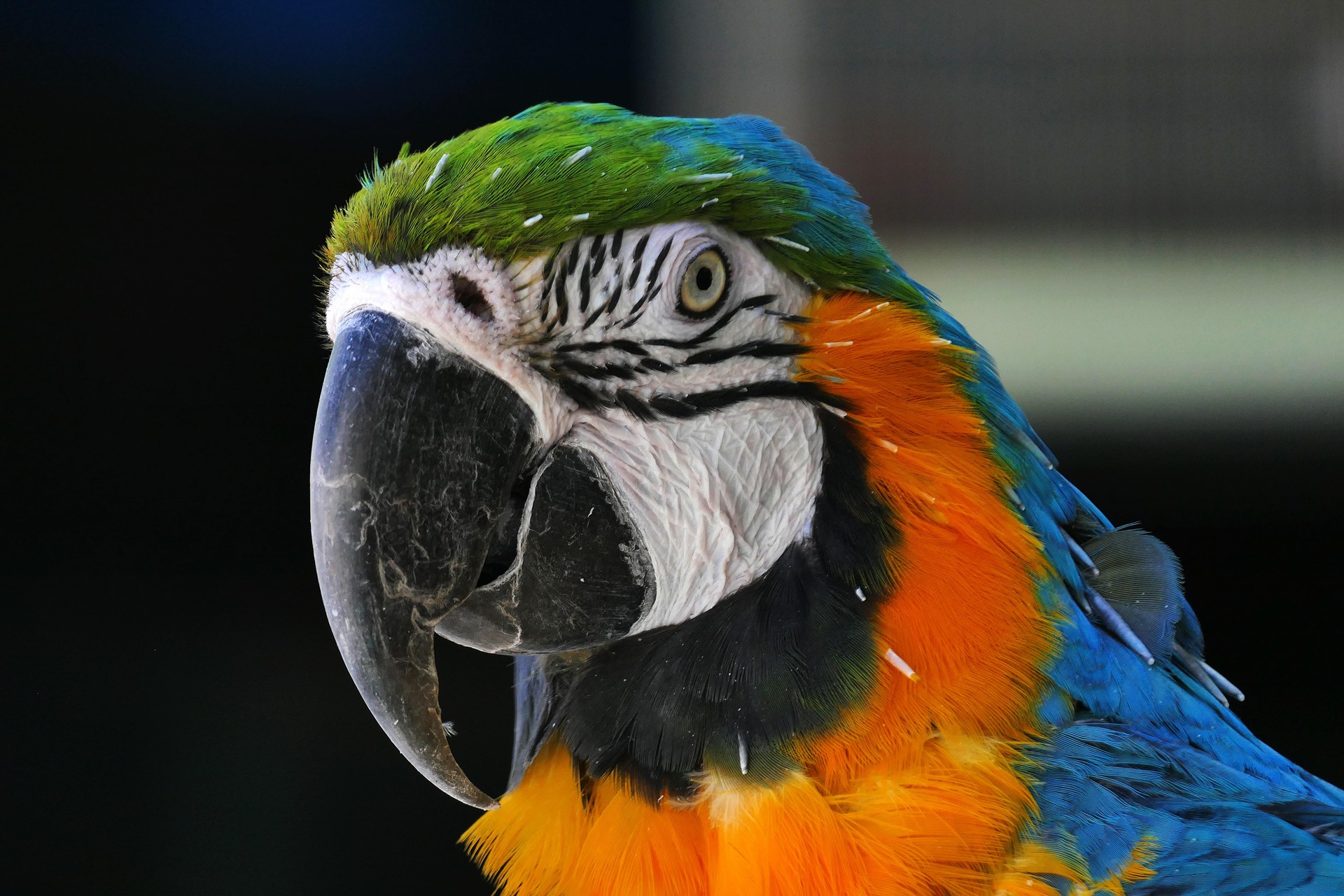
Find Out What Motivates Your Parrot
Birds are unique individuals. One of the most practical parrot training tips is to learn what your specific bird values most. Watch which foods your parrot selects first and which activities hold its attention. A favorite food can quickly become a useful training reward when offered in a small portion.
Keep food rewards small. Training often involves repeating a behavior several times, so a small reward allows you to reinforce multiple successful attempts without providing too much extra food.
Training treats should also be considered within your bird’s complete feeding plan. Pet parrots generally need a varied diet suited specifically to their species and individual needs, with guidance from an avian veterinarian when needed.
Keep Early Training Sessions Short and Focused
Learning how to train a pet parrot becomes easier when you begin with a single simple behavior at a time. Choose a calm setting and decide what you want your bird to learn before the session begins. Have your rewards ready so you can respond as soon as your parrot performs the desired behavior.
Short sessions are often enough, especially for beginners. Watch your bird rather than the clock. A parrot that remains interested, readily takes rewards, and continues participating may be comfortable continuing. A bird that loses interest or starts moving away is giving you a good stopping point.
Break larger behaviors into smaller steps. If you eventually want your parrot to step onto your hand, the first successful behavior may simply be staying relaxed while your hand is nearby. Later, you can reward moving closer, touching your hand, placing one foot on it, and completing the step. Each stage gives your parrot a clear path toward the final behavior.
Teach Your Parrot Target Training
Target training is a beginner-friendly exercise that can be useful with parrots that are still becoming comfortable around hands.
Choose a safe object to use only as a target, like a chopstick. Present it within easy reach of your parrot. When they touch the target, mark the behavior with a consistent word or sound and give a reward right away.
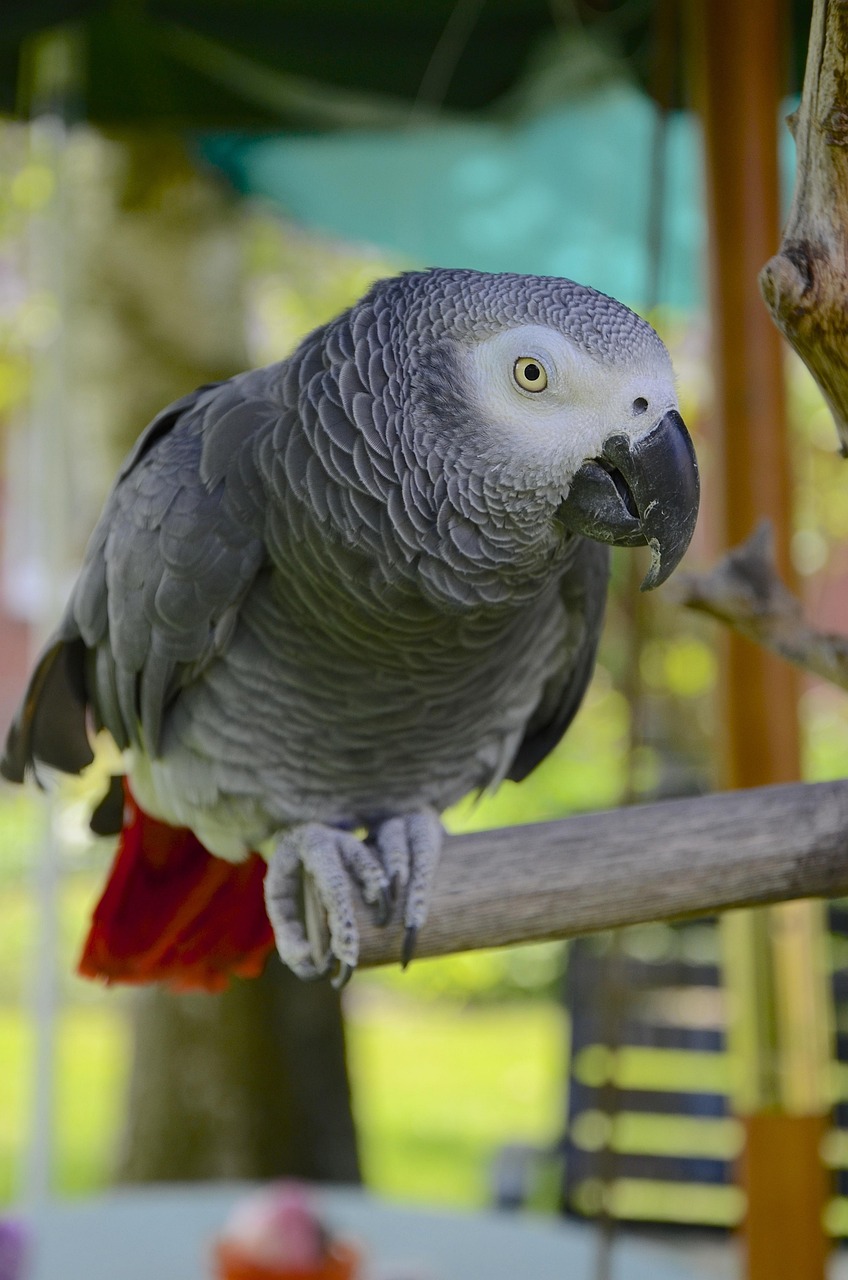
Targeting can later help you guide your bird from one perch to another, toward a carrier, or to a designated location. It creates a useful form of communication without relying on physical handling.
Teach Your Parrot to Step Up
Step up is one of the most useful behaviors for everyday parrot care because it gives you a reliable way to move your bird.
Begin when your parrot is relaxed with you nearby. Hold your hand or a handheld perch at a comfortable stepping height and reward your bird for moving toward it. As they gain confidence, gradually raise the criteria for receiving the reward. You might begin by rewarding an approach, then a foot placed on the perch, followed by a complete step.
Allowing your bird to make the movement willingly supports the trust you are building through the rest of your training.
Learn Your Parrot’s Body Language
Good parrot behavior training depends as much on observation as it does on cues and rewards. Every parrot has individual ways of communicating comfort, excitement, uncertainty, or a desire for space.
Learn how your bird normally holds its body, uses its feathers, moves around its environment, and responds when you approach. During training, look for changes in that normal behavior. A parrot that eagerly approaches and accepts rewards is giving you different information from one that repeatedly retreats or stops engaging.
Body language can also vary among parrot species. Learning the typical behavior of your bird’s species can give you helpful context, while daily observation will teach you the signals that are specific to your own parrot.
Respond to Biting by Looking for the Cause
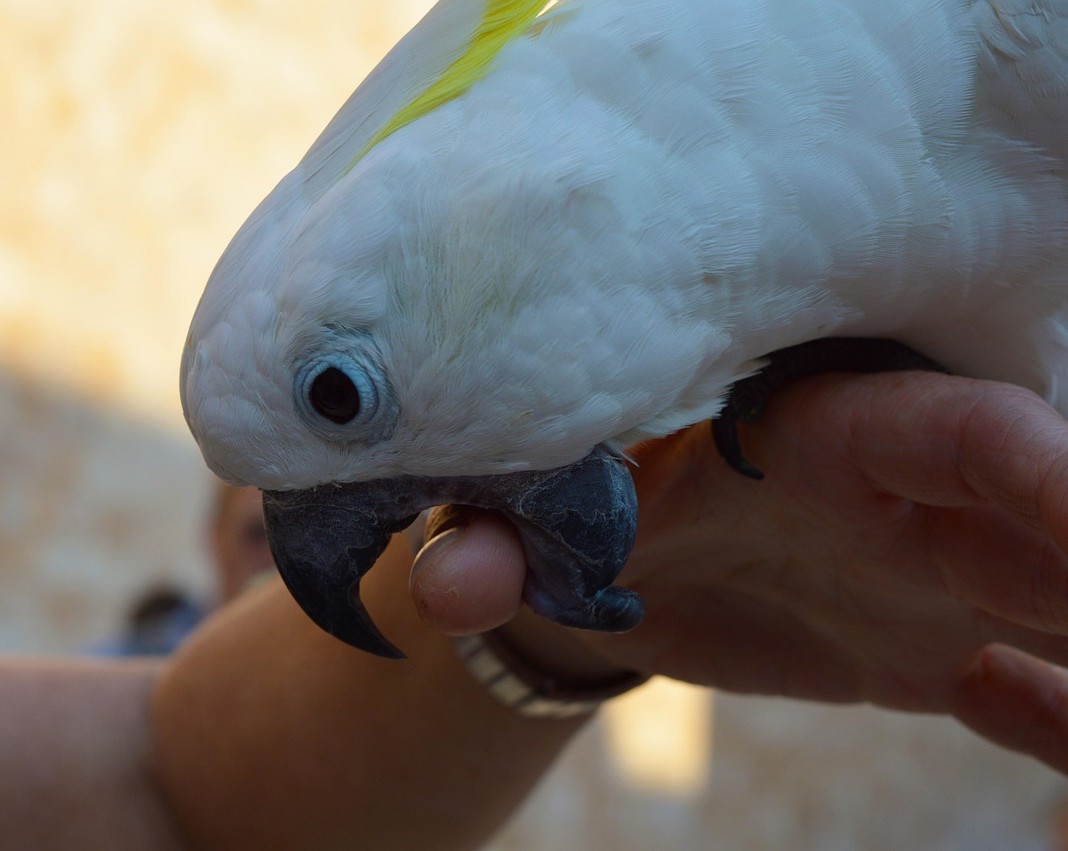
A bite often has context; look at what happened immediately beforehand and what your bird may have been communicating. Some parrots bite when an interaction continues after they have tried to move away. Fear, guarding a favored location, overstimulation, or discomfort can also contribute to biting.
Use what you observe to adjust future interactions. Giving your bird more space, making a training exercise easier, or teaching an alternative behavior can prevent the same situation from repeating. Targeting and stepping onto a handheld perch can be particularly helpful when direct hand contact is difficult.
Sudden or significant changes in behavior deserve extra attention. Contact an avian veterinarian if biting or aggression develops unexpectedly or appears alongside changes in appetite, droppings, activity, vocalization, or other normal habits.
Make Training Part of Everyday Pet Parrot Care
Formal training sessions are only one part of developing a good relationship with your bird. Many useful pet parrot care tips also support trust. Predictable routines can help your parrot become comfortable with daily life. Appropriate toys, foraging opportunities, social interaction, time outside the cage in a safe setting, fresh water, and species-appropriate nutrition also contribute to daily well-being.
Training can fit naturally into those routines. You might ask your parrot to step onto a perch before leaving the cage, touch a target before moving to a play area, or enter a carrier for a reward. These everyday interactions give you regular opportunities to communicate clearly with your bird without turning every encounter into a formal lesson.
Build Your Bond Through Consistent, Positive Experiences
Successful bonding with a pet parrot grows from repeated interactions your bird learns to trust. Over time, those small interactions can develop into a relationship built on familiarity and cooperation.
Nutrition is another important part of caring for your parrot each day. Star Milling Parrot Mix is a seed and grain blend formulated specifically for parrots. Talk with your avian veterinarian about how a seed and grain mix like Star Milling Parrot Mix can fit within an appropriate overall diet for your bird.