
Peppermint Candy
A Sweet & Safe Holiday Treat for Horses
About
Our Feed
Equine
Products
Dr. Bray's
Corner
Equine
Nutrition FAQ
Where
to Buy
Peppermint Treats for Horses: A Sweet Holiday Tradition in Moderation
The holiday season brings out peppermint everything—candy canes, festive lattes, cookies, chocolates, and bakery specials that fill the air with winter cheer. And if you’ve spent enough time around horses, you know our equine companions often get swept into the fun. From childhood memories to barn traditions, peppermint treats for horses have long been a special seasonal favorite.
Growing up, I wasn’t a big fan of peppermint candy myself. So when December rolled around and candy canes appeared everywhere, I’d snap them into small pieces and offer them to my horse instead. Those moments created some of my fondest memories. – my horse gently nudging his muzzle into the pocket of my jacket, knowing exactly where the peppermint stash was hidden. He had the run of the barn while we worked, and those sweet, quiet exchanges became part of our annual holiday rhythm.
Today, “NO SUGAR” messages dominate conversations about nutrition, for both humans and horses. Many owners worry about offering anything sweet, even in tiny amounts. But the truth is that peppermint treats for horses, when fed with care and moderation, can absolutely be part of your holiday bonding without compromising your horse’s health.
Let’s take a closer look at the numbers, the science, and how peppermint fits into a typical equine diet during the festive season.
How Much Sugar Is Really in Peppermint Treats for Horses?
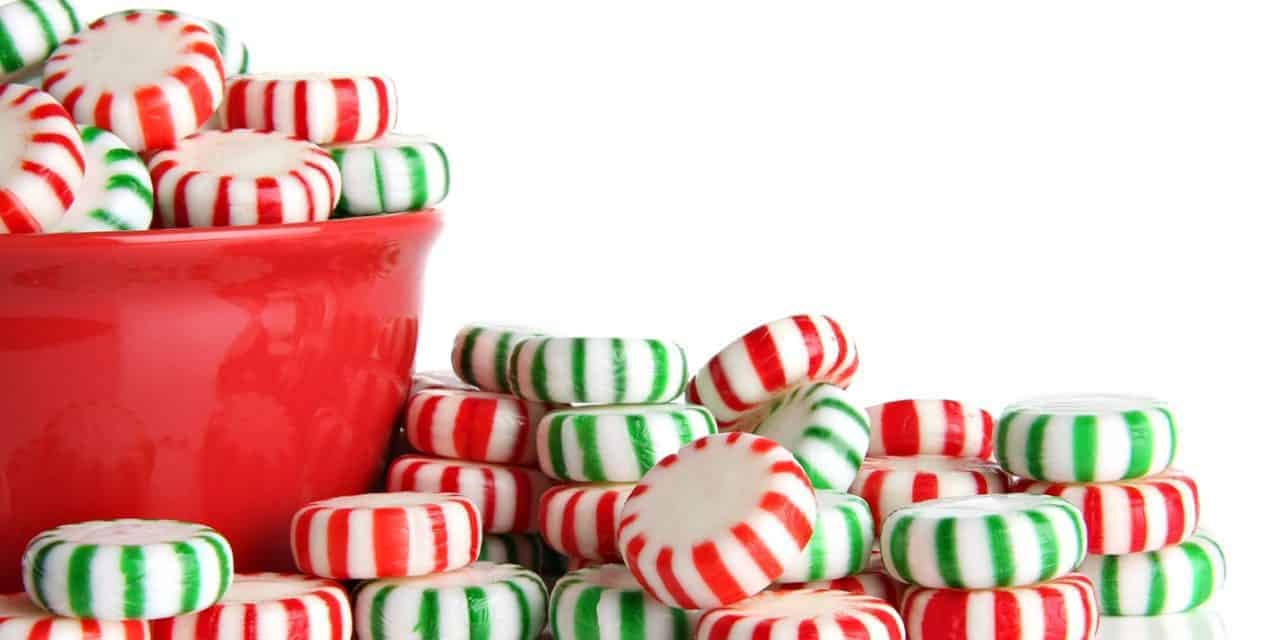
Not all peppermint candies are created equal. According to Brach’s, one Peppermint Star Brite candy weighs about 0.2 ounces, contains 20 calories, and has 3.7 grams of sugar which is roughly equivalent to a teaspoon. Candy canes vary widely in size and weight, meaning the sugar content can range from small amounts to significantly more. As a simple rule of thumb: bigger candy canes equal more sugar.
For healthy horses, small amounts of sugar are not inherently dangerous. But what about horses with metabolic concerns such as those diagnosed with insulin resistance (IR), equine Cushing’s disease (PPID), PSSM, or a history of laminitis?
This is where perspective becomes important.
Putting Peppermint Treats in Perspective: Sugar in the Total Diet
Every plant-based feedstuff—hay, pasture, commercial feeds, even beet pulp—contains some combination of sugar and starch. Sugars and starches fall under the category of non-structural carbohydrates (NSC), which are essential for nourishing and fueling the horse’s body. Oils are the only feed ingredient that contain no sugar or starch at all.
Let’s look at a typical winter hay ration for a 1,000-pound horse:
-
A horse eating 18 pounds of grass hay per day
-
At an average NSC level of 12%
-
Consumes approximately 981 grams of sugar and starch daily.
That’s 2.16 pounds of sugar and starch coming from hay alone.
If the hay is more mature or lower in NSC (around 10%) the total sugar and starch intake would still be around 871 grams per day.
Now compare that to a single Peppermint Star Brite:
-
3.7 grams of sugar
-
Which equals just 0.38% of the 981 grams of NSC in our hay example.
That means one peppermint contributes less than half of one percent of the sugar and starch your horse already consumes from forage—before considering any grain, supplements, or commercial feeds.
And if your horse is eating a low-starch or low-sugar balanced feed, that adds carbohydrates as well, making the peppermint an even smaller slice of the total dietary picture.
Why We Group Sugars and Starches Together
For nutrition comparison, sugars and starches are often grouped because the digestive system ultimately breaks both down into simple sugars like glucose and fructose. Whether a carbohydrate starts as a simple sugar or a starch, it ends up metabolized similarly in the small intestine.
This is why, even for horses with metabolic conditions, a tiny, infrequent peppermint rarely poses a problem — as long as your veterinarian approves. It is the total NSC load in the diet that matters most, not a single gram here or there during a special moment of bonding.
Holiday Bonding: How to Offer Peppermint Treats Safely
Sharing peppermint treats for horses can be a joyful part of your holiday barn life. Just keep these simple guidelines in mind:
1. Feed in Moderation
One peppermint is enough. Two is a treat. More than that? Save the extra candy for the humans in the barn.
2. Watch the Texture and Size
Break candy canes into small pieces to reduce choking risk. Choose soft peppermints over extremely hard, dense varieties.
3. Check Your Horse’s Medical Needs
Horses with metabolic disorders should always follow veterinarian-approved treat guidelines. Even tiny treats matter for some individuals.
4. No Peppermint-Flavored Chocolate
Chocolate peppermint treats, cookies, and bakery items often contain cocoa. Horses should NEVER consume chocolate due to theobromine toxicity.
A Sweet and Safe Holiday Tradition
Peppermint treats bring a little extra magic to the winter months. Whether they come from a broken candy cane pulled out of a jacket pocket or a small peppermint shared during grooming, these moments help create cherished memories between you and your horse.
When you understand the nutritional context and practice moderation, peppermint treats for horses are a perfectly safe and wonderfully festive—way to celebrate the season. So go ahead and enjoy those quiet holiday bonding moments. Your horse will appreciate the sweet attention just as much as the peppermint.

Holiday Bonding: How to Offer Peppermint Treats Safely
Sharing peppermint treats for horses can be a joyful part of your holiday barn life. Just keep these simple guidelines in mind:
1. Feed in Moderation
One peppermint is enough. Two is a treat. More than that? Save the extra candy for the humans in the barn.
2. Watch the Texture and Size
Break candy canes into small pieces to reduce choking risk. Choose soft peppermints over extremely hard, dense varieties.
3. Check Your Horse’s Medical Needs
Horses with metabolic disorders should always follow veterinarian-approved treat guidelines. Even tiny treats matter for some individuals.
4. No Peppermint-Flavored Chocolate
Chocolate peppermint treats, cookies, and bakery items often contain cocoa. Horses should NEVER consume chocolate due to theobromine toxicity.
A Sweet and Safe Holiday Tradition
Peppermint treats bring a little extra magic to the winter months. Whether they come from a broken candy cane pulled out of a jacket pocket or a small peppermint shared during grooming, these moments help create cherished memories between you and your horse.
When you understand the nutritional context and practice moderation, peppermint treats for horses are a perfectly safe and wonderfully festive—way to celebrate the season. So go ahead and enjoy those quiet holiday bonding moments. Your horse will appreciate the sweet attention just as much as the peppermint.