
How Often Should You Feed
Koi and goldfish in ponds
Order
Online
About Our
Fish Feed
FISH FOOD
FAQ
Fish Feeding
Instructions
Where
To Buy
How Often Should You Feed Koi and Goldfish in Ponds?
How often to feed koi is a common question among new pond owners, especially when fish seem ready to eat every time they come to the surface. That reaction can make feeding feel less clear than it should be. A steady feeding plan supports growth, digestion, and water quality while giving owners a better way to judge what their fish actually need.
How Often to Feed Koi and Goldfish: Quick Answer by Water Temperature
The best koi food schedule starts with water temperature, then shifts based on fish activity and pond conditions:
- In water above 70°F, most koi and goldfish do well with two to four small meals a day.
- Between 60°F and 70°F, one to two small meals a day is usually enough.
- Between 50°F and 60°F, feed lightly only if fish are active.
- Below 50°F, feeding should generally stop.
Koi and Goldfish Feeding Temperature Chart
The best koi food schedule comes down to water temperature first, then fish activity and pond conditions. Exact frequency still depends on fish size, pond load, and how quickly the fish finish their feed.
Water Temperature |
Feeding Guidance |
| 70°F + Up | Feed 2-4 small meals a day, while watching water quality and appetite |
| 60F to 70°F | Feed 1-2 small meals a day |
| 50°F to 60°F | Feed lightly, from a few times a week up to once daily, only if fish are active |
| Below 50°F | Do not feed or feed only if a fish professional has advised you otherwise |
Seasonal Goldfish & Koi Pond Feeding Schedule
Goldfish feeding schedules are often very close to the koi routine. Goldfish in outdoor ponds usually do well with small, measured meals during the warmer part of the year and less feed as temperatures cool. In many backyard ponds, one feeding in the morning and another later in the day is a good place to start.
Spring Feeding
Spring feeding should begin slowly. When water rises into the low 50’s, koi often start showing more interest in food, but digestion is still slower than in the summer. A cautious schedule of light feeding a few times a week is usually a better starting point than daily feeding. As water climbs through the upper 50s and into the 60s, many pond owners move toward once-daily feeding and then one to two meals a day as activity picks up. Spring is also the season to pay close attention to leftovers. Fish may look interested in food before they are ready for larger portions, so smaller meals still make the most sense.
Summer Feeding
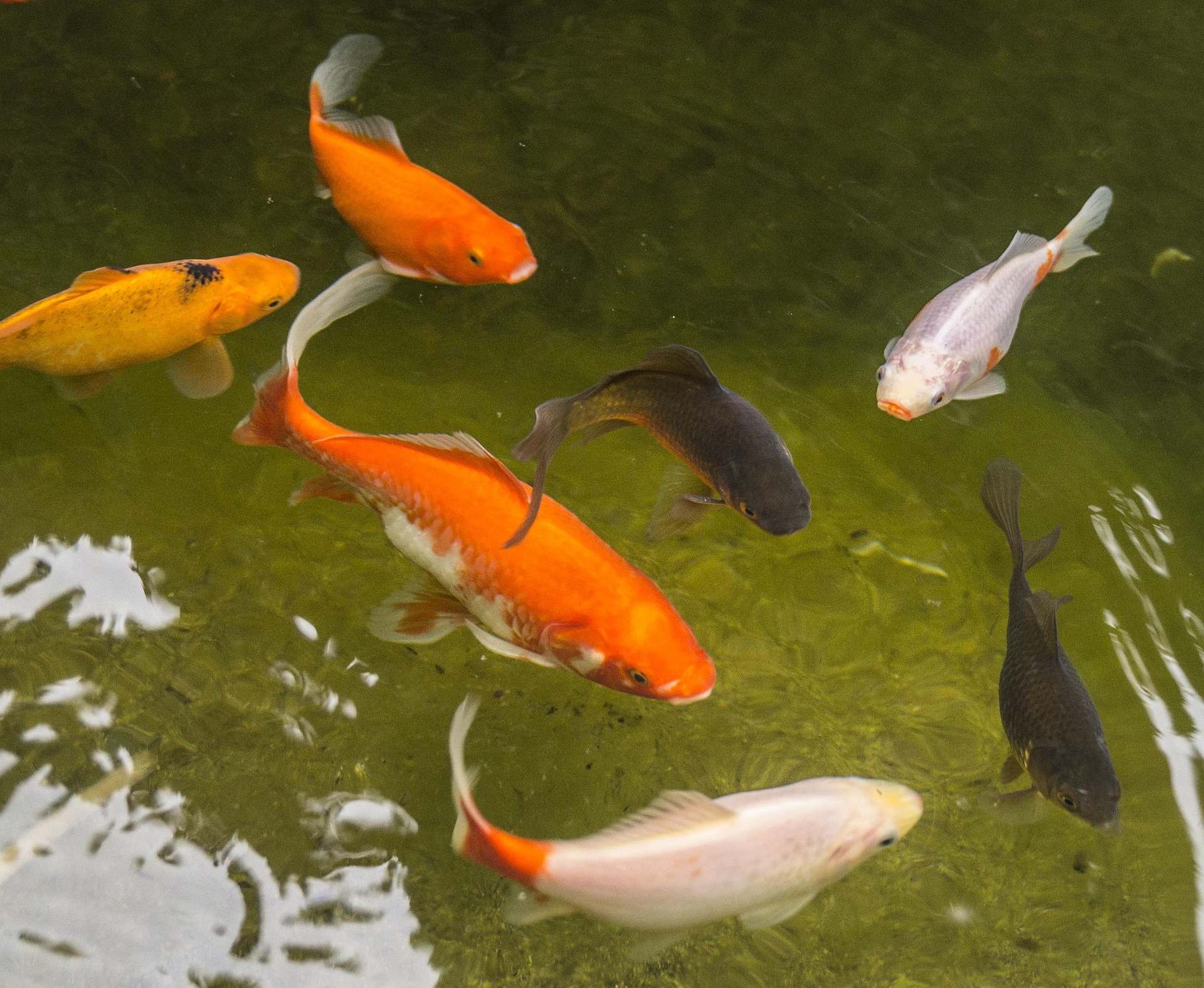
Summer is when koi are usually most active, and is the season when most ponds support the highest koi feeding frequency. When water is above 70 degrees and fish are feeding well, two to four small meals a day is common. This is often the easiest time of year to build a regular feeding routine because appetite is stronger and fish are easier to observe. Even in summer, portion size is still important. Smaller meals are usually a better fit than one large feeding. Fish can eat comfortably, owners can watch how quickly pellets are finished, and there’s less chance of extra feed sitting in the pond. A steady summer routine should support growth without adding unnecessary waste to the water.
Treat Foods Can Add Variety
Treat foods can have a place in a healthy routine when they are offered in moderation. Many pond owners offer peas, leafy greens, or small bits of fruit during warm weather when fish are active and feeding well. Treats should stay secondary to the main diet. A balanced feed should still do most of the work. Small portions are the best approach, and leftovers should be removed so they don’t sit in the pond.
Feeding In Fall
Fall is when the schedule starts moving in the other direction. As water cools from the upper 60s into the 50s, feeding should taper down. Many ponds shift from one to two meals a day to lighter feeding a few times each week. This is also a good time to watch how the fish respond from day to day, rather than sticking to the same summer pattern. The main mistake in fall is holding onto a warm-weather schedule for too long. Koi and goldfish may still rise to the surface, but their digestion changes as the water cools. A lighter schedule fits that transition better.
Feeding In Winter
Feeding koi fish in winter depends on water temperature and fish behavior. As the water cools, koi slow down and digest food more slowly. That means winter feeding should be much lighter and less frequent than summer feeding. The fish usually make it fairly clear when it’s time to scale back. If they stay lower in the pond, move less, or show little interest in food, reduce feeding. Winter is a time to be cautious with portions and avoid overdoing treats.
How To Tell If Koi Are Hungry
Hungry koi usually become more alert when you approach the pond. They may gather near the surface, follow your movement, or head toward the spot where they are usually fed. During warm, active periods, they often rise quickly and eat with real interest.
Best Time of Day to Feed Koi & Goldfish
The best time to feed koi and goldfish is usually later in the morning or in the afternoon, once fish are active and water temperatures have had time to rise a bit. In warm weather, many pond owners split feedings between morning and late afternoon. That gives fish more than one chance to eat without crowding too much food into a single feeding. It also helps to stay consistent. Fish quickly learn when feeding usually happens, and a regular daily rhythm makes it easier to watch appetite and spot changes.
Natural Pond Foods Also Play A Role In Nutrition
A healthy pond offers more than prepared feed. Koi and goldfish naturally graze on algae, insects, and small bits of plant material. That natural foraging adds interest to their day and can supplement their diet, especially in established ponds. Still, natural pond foods should support the diet rather than carry it. Owners who rely only on algae and insects may see uneven growth and inconsistent body condition.
A complete floating pellet gives pond fish a more dependable source of protein, fat, vitamins, and minerals. Floating pellets give pond owners an advantage, too. You can watch the fish eat, check their appetite, and adjust portions before the feed sinks or drifts away. That kind of visibility is helpful when you’re trying to fine-tune a goldfish pond feeding schedule or improve your koi feeding frequency.
What Do You Feed Koi Fish
Koi do best on a complete diet made specifically for ornamental pond fish. A good pellet gives them more balanced nutrition than natural pond foods alone. While koi and goldfish naturally graze on algae, insects, and bits of plant material, those food sources can vary quite a bit from one pond to another. A complete feed gives owners more consistency from day to day.
Star Milling 38% Koi/Goldfish Float Food is a strong fit for this kind of routine. It is made for koi and goldfish, and the floating format makes it easy to watch feeding, adjust portions, and cut down on waste. With the right schedule and close attention to fish behavior, feeding becomes easier to manage and more consistent from season to season.