
Are My Hen’s Eggs Fertilized?
A chicken keeper’s guide
About
Our Feed
Poultry
Care Corner
Poultry
Products
Grains &
Simple Ingredients
Where
to Buy
Are My Hens’ Eggs Fertilized? A Backyard Chicken Keeper’s Complete Guide
Most backyard chicken owners eventually ask: “Are the eggs my hens lay fertilized?” It’s a great question, and a fun bit of chicken biology to understand! Whether you’re raising chicks or simply curious about what’s happening in your coop, here’s everything you need to know in clear, simple terms.
Anatomy of a Chicken Egg
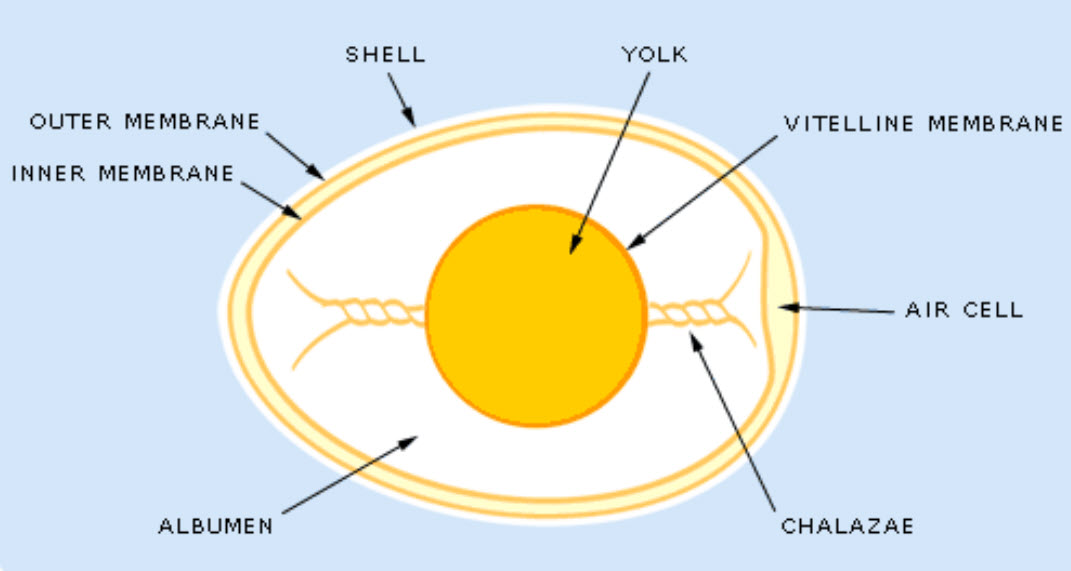
Before discussing fertilization, it helps to know the basic parts of a chicken egg. The hard shell protects the egg, with outer and inner membranes just beneath it that form the air cell at the wide end. Inside, the albumen (egg white) cushions the yolk and provides nutrients, while the yolk contains the rich nutrients needed to support a developing chick. The yolk is held in place by the chalazae and surrounded by the vitelline membrane. Understanding these parts makes it much easier to see where fertilization occurs and what changes (if any) you might notice inside the egg.
What Is a Fertilized Egg?
In basic terms, a fertilized egg is one that contains genetic material from both a hen and a rooster, and therefore has the potential to develop into a chick under the right conditions. This happens when a rooster mates with a hen, passing sperm that meets the hen’s egg before the shell forms.
It’s important to note that most hens naturally lay eggs every 24–26 hours regardless of whether a rooster is present. If no rooster has mated with them, the eggs are unfertilized and cannot develop into chicks.
Do Fertilized Eggs Look Different?
For everyday home use fertilized and unfertilized eggs are visually indistinguishable. They taste the same and have similar nutritional value. Even inside the shell, you can’t tell whether an egg is fertilized just from the outside. A scientific look at the yolk is needed.
3 Easy Ways Backyard Owners Can Tell If an Egg Is Fertilized
Here are the most common methods chicken keepers use:
1. Look at the Yolk (Crack Test)
Every chicken egg has a tiny white spot on the yolk called the germinal disc.
-
Unfertilized eggs: A small white dot
-
Fertilized eggs: A larger, bullseye-like ring called the blastoderm, showing genetic material from both hen and rooster
This method destroys the egg, so use it only if you don’t plan to hatch it.
2. Candle the Egg (Non-Destructive)
Candling means holding a bright light in a dark room so you can see inside the egg.
-
Around day 4–7 of incubation, a fertilized egg will show dark veins and sometimes a small embryo form.
-
Unfertilized eggs stay mostly clear except for the yolk shadow.
Candling is great if you’re trying to hatch chicks and want to check progress without cracking eggs.
3. Wait and Watch (Incubate Naturally)
If a broody hen on a clutch of fertile eggs for about 21 days, you might hatch chicks. This is the ultimate sign that those eggs were indeed fertilized!
How Does Fertilization Happen?
Fertilization occurs before the shell forms, basically inside the hen’s oviduct. If a rooster has mated successfully, the sperm travels up to meet the yolk before the albumen (white) and shell are added. Hens can store sperm for up to several weeks, meaning a single mating can fertilize multiple future eggs.
One of the most common misconception about chicken eggs is that grocery store eggs are fertilized. Commercial eggs come from layers that are not in contact with roosters, so their eggs are always unfertilized. Even if a grocery store’s carton is labeled “free-range” or “organic” eggs.
Fun Facts Every Chicken Keeper Should Know
- Blood spots are not embryos. A red spot inside an egg is almost always just a ruptured blood vessel and has nothing to do with fertilization.
- Roosters aren’t needed for eggs. Your hens will lay daily whether or not a rooster is present, but you just won’t get chicks without one.
- Fertilized eggs are safe to eat. There’s no difference in taste or safety compared to unfertilized eggs.
Final Thoughts
Understanding egg fertilization adds a fascinating layer to backyard chicken keeping. Whether you’re hoping to raise chicks or simply want to be more informed about your flock’s biology, these tips will help you tell what’s happening inside the shell without the stressful guesswork. For lots of information on chicken keeping, visit our Poultry Care Corner for articles and more.