
Best Chicken Breeds
For beginners
About Our
Poultry Feed
Poultry
Care Corner
Poultry
Products
Grains &
Simple Ingredients
Where
to Buy
How to Choose the Best Chicken Breeds for Beginners
Starting your backyard flock is an exciting prospect, but choosing the right birds makes all the difference. If you’re researching the best chicken breeds for beginners, you’re already on the right track. Not all chickens are created equal when it comes to temperament, egg production, hardiness, and ease of care.
For backyard chicken owners and small flock keepers, selecting the right breed can make raising chickens easier and more enjoyable. The best chicken breeds for beginners tend to be hardy, manageable, friendly, and dependable egg producers. However, the right choice also depends on your climate, available space, flock goals, and how much you plan to handle your chickens. Whether you want family-friendly hens, reliable layers, or chickens that adapt well to a backyard coop, choosing a breed that fits your needs is an important first step.
What Makes a Chicken Breed Good for Beginners?
Choosing your first chickens is easier when you know what to look for in a beginner-friendly breed. Look for chickens that are generally easy to manage and well suited to backyard flock keeping. A breed’s temperament, egg production, hardiness, and adaptability can all influence how well it fits your experience level and daily routine.
Consider Your Flock Goals
Before choosing a breed, think about what you want from your backyard flock. Are fresh eggs your main priority? Do you want chickens that are easy for children to handle? Are you looking for birds that tolerate hot summers or cold winters?
For most first-time chicken owners, a good starter breed should be relatively calm, adaptable, and easy to manage. Egg production is also important for many backyard keepers, but the breed that lays the most eggs is not necessarily the best choice for every beginner.
Consider these factors when comparing chicken breeds:
- Temperament: Friendly, docile chickens are generally easier to handle and manage.
- Egg Production: If eggs are your priority, look for breeds known for consistent laying.
- Climate: Choose birds that can tolerate the temperatures and weather conditions in your area.
- Space: Some breeds are more active and benefit from additional room to forage.
- Hardiness: Resilient breeds can make the learning curve easier for first-time owners.
- Flock Compatibility: If you plan to keep several breeds together, consider temperament and activity level.
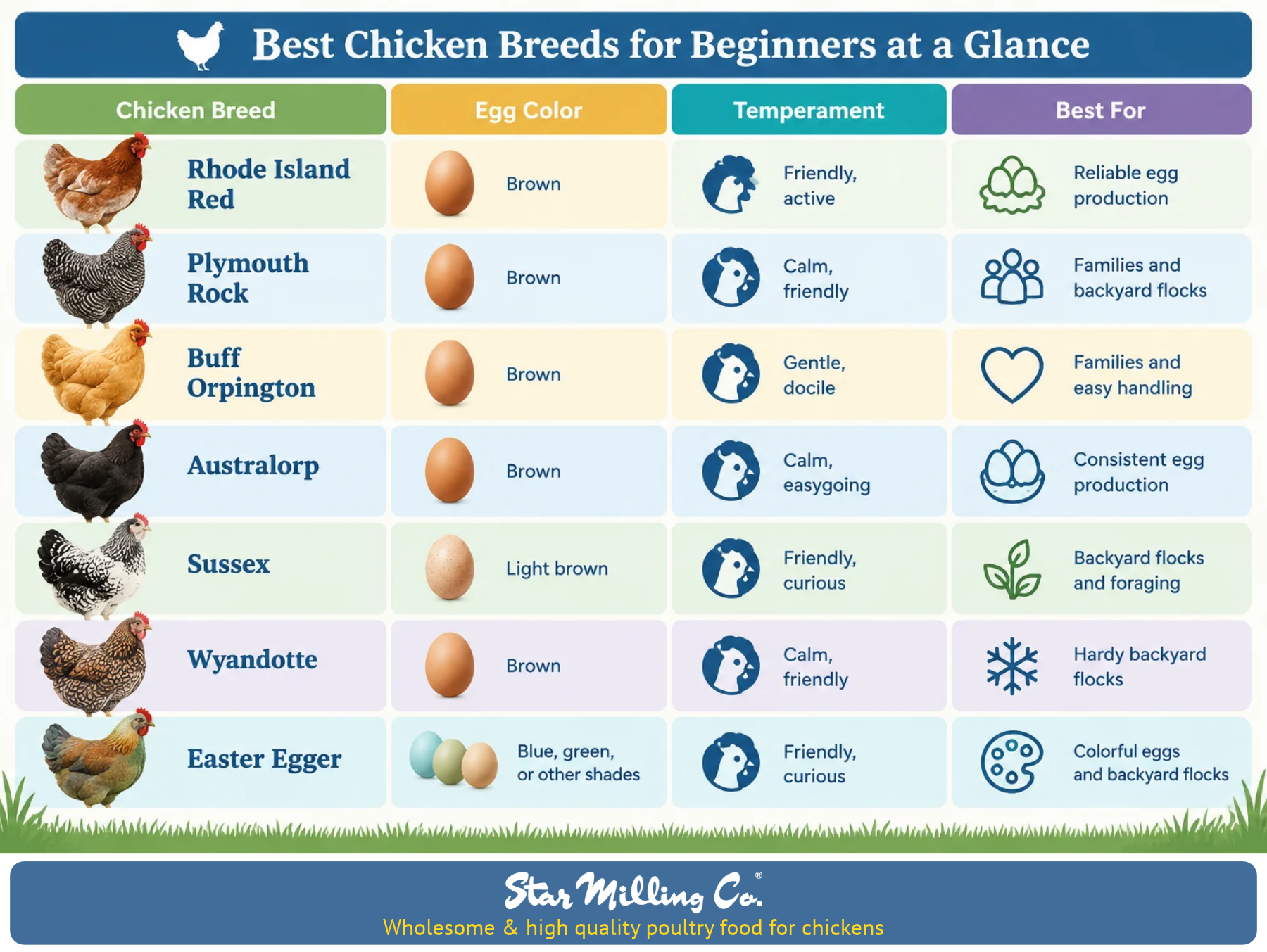
Top Backyard Poultry Breeds for Beginners
Here are some of the best beginner-friendly chicken breeds and what makes them so desirable for first-time owners.
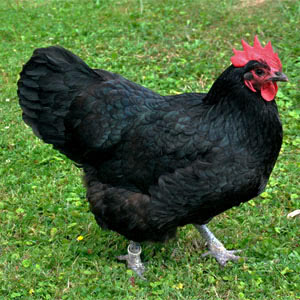
Australorp Chicken
Australorp
Australorps are quiet, calm birds that are excellent layers.
Why they’re great for beginners:
- High egg production
- Gentle disposition
- Adaptable to different climates
- Generally easy-going in mixed flocks
Best for: Beginners who want a calm chicken with strong egg-laying potential. Australorps can be a good option for keepers who want productivity without sacrificing an easygoing temperament.

Buff Orpington Chicken
Buff Orpington
Buff Orpingtons are well-known for their sweet, gentle nature.
Why they’re great for beginners:
- Extremely friendly and easy to manage
- Good brown egg layers
- Tolerate confinement well
- Cold-hardy due to fluffy feathers
Best for: Families and beginners who prioritize a gentle temperament and easy handling. Their calm personality makes Buff Orpingtons especially appealing when chickens are going to be part of family life rather than simply egg producers.

Easter Egger Chicken
Easter Egger
Easter Eggers are popular because they can produce eggs in shades of blue, green, or other colors depending on their genetics.
Why they’re great for beginners:
- Generally friendly and curious
- Colorful eggs add variety to the egg basket
- Active foragers
- Available in a variety of appearances
Best for: Families and beginners who want colorful eggs as part of the fun from your first flock, Easter Eggers can be an entertaining and beginner-friendly choice. Although they are not a standardized breed, but are a popular choice for first-time flock owners.
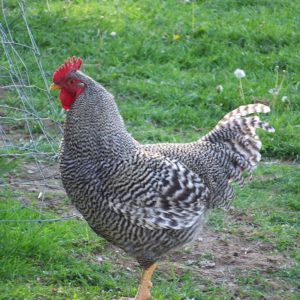
Plymouth Rock Chicken
Plymouth Rock (Barred Rock)
Plymouth Rocks, especially the barred variety, are a favorite among backyard keepers.
Why they’re great for beginners:
- Friendly and docile temperament
- Reliable egg production
- Cold-hardy
- Easy to handle
Best for: Families and first-time chicken owners who want a calm, easy-to-handle breed. Their friendly nature and adaptability make Plymouth Rocks a practical choice for many backyard flocks.

Rhode Island Red Chicken
Rhode Island Red
One of the most popular backyard breeds, Rhode Island Reds are known for their reliability and resilience.
Why they’re great for beginners:
- Excellent brown egg layers
- Hardy in both hot and cold climates
- Generally low-maintenance
- Strong foragers if free-ranging
Best for: Beginners who want a hardy, dependable breed with good egg production and strong foraging ability. Rhode Island Reds can be more assertive than some gentler breeds, so consider flock temperament when mixing them with other chickens.

Sussex Chicken
Sussex
Sussex chickens are another beginner-friendly breed known for their adaptability.
Why they’re great for beginners:
- Friendly and curious
- Good egg layers
- Thrive in backyard environments
- Strong foraging ability
Best for: Backyard keepers who want active, curious chickens that are good foragers. Sussex chickens can be a versatile choice for beginners who want a friendly flock with plenty of personality.

Wyandotte Chicken
Wyandotte
Wyandottes chickens are a popular choice due to their attractive feathering and hardiness.
Why they’re great for beginners:
- Generally friendly and easy to manage
- Good brown egg layers
- Cold-hardy
- Available in several attractive color varieties
Best for: Beginners who live in colder climates or those who want a hardy, versatile addition to a mixed flock. Wyandottes also adapt easily to backyard environments.
Choosing the Best Chicken Breed for Your Goals
There is no single chicken breed that is best for every backyard flock. The right choice depends on what you want from your chickens.
Best Chicken Breeds for Families
If children will be helping care for the flock, prioritize calm, docile breeds that are easier to handle. Buff Orpingtons and Plymouth Rocks are good options to consider because of their generally friendly temperaments.
Best Chicken Breeds for Egg Production
If collecting fresh eggs is your primary goal, look for breeds known for dependable egg production. Rhode Island Reds and Australorps are popular choices for backyard keepers who want reliable brown egg layers.
Best Chicken Breeds for Cold Climates
For colder areas, consider hardy breeds with heavier feathering and characteristics that help them tolerate winter conditions. Buff Orpingtons, Plymouth Rocks, and Wyandottes are worth considering.
Best Chicken Breeds for a Mixed Flock
If you want several breeds together, look for birds with compatible temperaments and similar care requirements. Combining calm, adaptable breeds can help create a more manageable backyard flock.
Best Chicken Breeds for Colorful Eggs
If you want more variety in your egg basket, consider adding Easter Eggers. Their eggs can range from blue and green to other shades depending on the bird’s genetics.
Choosing the Right Breed for Your Climate
Climate plays a major role when selecting the best chicken breeds for beginners. Matching breed characteristics to your environment reduces stress and health issues. In colder regions, choose breeds with heavier feathering and smaller combs to reduce frostbite risk. In hotter climates, keepers should opt for breeds known for their heat tolerance.
Remember that choosing a climate-appropriate breed is only part of keeping chickens comfortable. A well-ventilated chicken coop, access to shade, clean water, and protection from drafts and extreme weather are important for every breed.
In hot weather, chickens need shade, plenty of fresh water, and good airflow. During cold weather, a dry, well-ventilated coop helps reduce moisture and condensation while protecting birds from harsh conditions. Your local climate should therefore be considered alongside the breed’s natural characteristics when choosing your first flock.
Egg Production Expectations
While many beginner breeds are reliable layers, remember that egg production varies by age, nutrition, and season. Providing a balanced layer feed, fresh water, and proper lighting during shorter days supports steady production. Avoid overfeeding treats, as this can dilute essential nutrients and affect laying performance.
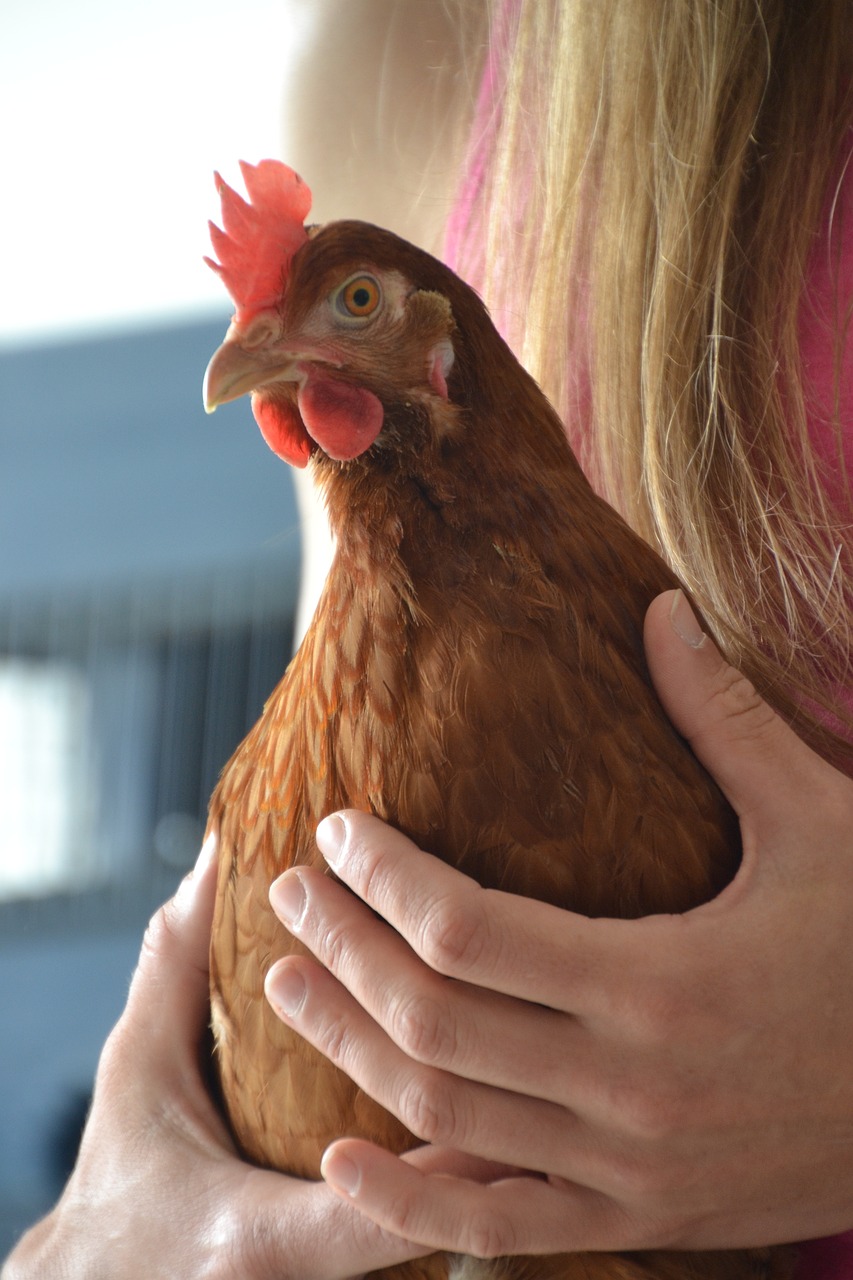
How Many Eggs Can a Beginner Expect?
Egg production varies considerably between individual hens. Age, breed, daylight, nutrition, health, stress, and seasonal changes can all influence how often a hen lays. Young hens generally begin laying at around the five- to six-month stage, although timing varies by breed and individual bird. Egg production is typically strongest during the first years of laying and naturally changes as hens age.
For beginners, it is better to focus on providing consistent care and balanced nutrition than expecting a specific number of eggs every week. A quality layer feed, clean water, appropriate housing, and good flock management provide the foundation for healthy hens and reliable egg production.
Temperament Matters in Small Flocks
Backyard flocks often consist of 3–10 hens. In small groups, temperament becomes especially important. Aggressive or dominant birds can stress the entire flock, leading to pecking issues and reduced egg production. Choosing calm, docile breeds makes management easier and creates a more peaceful coop environment.
Do Beginners Need a Rooster?
If your primary goal is fresh eggs, you do not need a rooster. Hens will lay eggs without one. A rooster is only necessary if you want to hatch fertile eggs and produce chicks.
For many first-time backyard chicken keepers, starting with hens can make flock management simpler. Before adding a rooster, check local regulations and consider your neighbors, available space, and the temperament of the birds you plan to keep.
Start Simple and Build with Confidence
When starting out, it’s wise to begin with 3–6 hens from beginner-friendly breeds. As you gain experience, you can experiment with other varieties. The best chicken breeds for beginners are not necessarily the birds that lay the most colorful eggs or have the most unusual appearance. The best choice is a breed that fits your goals, climate, space, and experience level.
For many first-time backyard chicken keepers, breeds such as Rhode Island Reds, Plymouth Rocks, Buff Orpingtons, Australorps, Sussex, Wyandottes, and Easter Eggers offer a good combination of manageable care, useful egg production, and beginner-friendly characteristics.
Once you’ve selected your chickens, proper housing, nutrition, fresh water, and daily care are just as important as choosing the right breed. With the right preparation and a breed suited to your backyard, starting your first flock can be a rewarding experience.
For more tips and trusted expertise on everything poultry, check out our Poultry Care Corner for more information.
Looking for more information?
Visit our Poultry Care Corner for expert advice about poultry feeding & care.